Maybe What You Need Isn’t More Advice, But Someone to Listen

In the 1980s, if you wanted to receive advice on how to grow a tomato, you probably had to talk to someone, or go to the library and get out a book on the topic. The time frame between wanting to grow the tomato and getting the information on how to grow said tomato might be a week or so. That’s provided that you knew someone, or the library had the book you wanted in stock, and that there was enough information available on the said topic. You might still feel confused when you read the book; perhaps it wasn’t written well enough, or didn’t have enough diagrams for you to understand. In which case, maybe you’d sign up for a course, or try to find an expert to speak to.
These days, information has never, ever been easier to attain. Especially if you know how to use a phone. With the click of a few buttons, and/or maybe the use of an AI website, you can pretty much guarantee some decent information on any chosen subject, and the option to clarify anything you don’t understand. Information is no longer rare or difficult to access.

Given the abundance of resources, there is a really, really good chance that you already know what the problem is, and you already know what you should (at least in theory) be doing. The issue usually isn’t about information, it’s usually more about the experience of being isolated and frustrated. You might be surrounded by people, but does it feel like you can relax and talk about your struggles without being interrupted, or advised to do things you already know about?

You may know that you’re low, or that you’re stuck in a binge-loop cycle. You may have already read up on it, and have good insight into what needs to be done. But doing anything on your own in life is tough. Accountability and care are the difference between the idea of doing something and the reality of living it. Especially when you hit a dip, or change starts feeling exhausting and painful, and your coping mechanisms seem more attractive than the idea of a different life.

Talking is cathartic and being able to hear your own voice explain the problem can help you solve it. I’ve seen it enough times now to know that it works.  
What If It’s Not About the Food? | A Norwich Counsellor Explains

Michelle was beautiful, not just physically, but in the way she thought, spoke, and related to others. She was funny, kind, and seemed to know exactly what to say at the right moment. She was a deep thinker and insightful in a unique way. But she never felt it for herself.

Whatever she did, it was never enough. If she ran two miles today, it had to be three tomorrow. If she ate “well” today, she had to do the same, or better, the next. The goalposts kept moving. Even when she reached her goal weight (more than once) the same feelings of inadequacy remained.

Nothing changed, because the way that she felt about herself didn’t change.

So, it’s not just what you do. It’s how you feel about yourself.

You can strive, achieve, and push yourself forward. But how do you feel when you wake up in the morning? How do you feel when you’re alone? Before you start something new, meet someone new, or start a new challenge?

Do you only feel okay when you’ve achieved something? Or can you feel at ease in moments where nothing is being proved?

I don’t believe any eating behaviour is inherently bad in itself.

You can track calories, restrict, eat past fullness, eat “clean,” or eat ultra-processed food, and none of these behaviours alone define a problem. What matters is the meaning behind them.

Are you doing what you’re doing because it brings you joy? Or because you’re trying to fix, control, or make yourself acceptable?

Is food, or the control of it, becoming a way to try to like yourself and your life?

How you feel about yourself, and your life, is where the work really begins.

Why trying to control your eating might be making things feel worse | A Norwich Counsellor Explains

Why trying to control your eating might be making things feel worse

If control worked, it would have worked by now.

You tell yourself today will be different. You’re going to be “good”. You’ll get your steps in, drink the water, track everything. At first, perhaps you feel steady; Contained, reassured, peaceful, maybe even hopeful.

But by mid-afternoon, something shifts. The cravings come in; persistent, hard to ignore. You have some chocolate.

And almost immediately, something else follows. A wave of guilt. Anxiety. A sense that something has gone wrong. From there, the rules lose their footing. The day takes on a different shape. By evening, you might feel full, uncomfortable, and disconnected from yourself.

And so the cycle continues.
On, off. Trying again. Starting over.

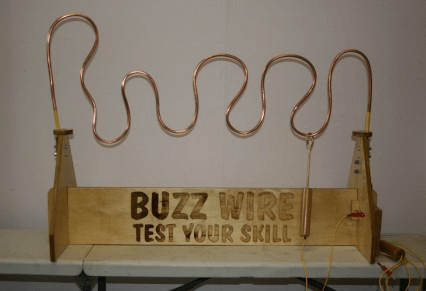
When I sit with clients, I’m often reminded of that game where you guide a metal loop along a wire.
The aim is simple: don’t let it touch the sides.

But the moment it does, you can hear a loud beeping noise. Argh. Back to the beginning.

It’s tense, asks for constant precision, and it’s exhausting to sustain.

So it can be worth asking:

When did this need for control begin?
What was happening at the time?
What does “being in control” actually mean to you?

Because, what if your patterns of eating aren’t failures?

What if something in you is trying to respond: to soothe, to regulate, to manage something that feels difficult to contain? To find joy when life feels heavy? Or grounding when life feels like it’s too exhilarating?

Our relationship with food can tell us a great deal about our relationship with ourselves.

In my experience, our relationship with food is the tip of the ice berg. It’s a symptom, not the problem in and of itself. For example, if you restrict, you might be feeling lost and overwhelmed. Or if you binge, maybe you might need release and more creativity in your life. There might not be a clear answer in this moment, but it can be worth pausing to reflect on what we might be trying to experience outside of a different body type.

When things feel uncertain, or overwhelming, how do we meet ourselves in those moments?

And what might we learn if, instead of tightening control, we became a little more curious about what’s underneath?

Because it may not be about food at all. It may be about how we’re trying to find peace.

Do I Need Counselling? A Norwich Counsellor Explains

Many people looking for counselling in Norwich ask this question. They wonder whether their difficulties are challenging enough to talk to someone about.

I think this is a great question.

My initial thoughts are: what constitutes a need, and what constitutes a want? When does something become essential, and when is it simply something that might be useful? How do you know when the desire for support becomes urgent, and does it have to be urgent in order to be worth having?

To begin answering this question, it might be helpful to consider what counselling offers.

Counselling can provide:

  • A safe space that is focused entirely on you and your life.
  • A weekly, consistent place to discuss and process what matters to you.
  • The knowledge that you will be respected, cared for, and rooted for.
  • A relationship with someone whose only aim is to walk alongside you.

With that in mind, we might think about the times when that kind of space becomes particularly helpful, or perhaps even essential.

For example:

  • When you feel stuck or overwhelmed, unsure where to turn or what the next steps in life might be.
  • When you feel like you’ve tried many options but are becoming exhausted or discouraged.
  • When significant relationships break down and you’re experiencing heartbreak, conflict. You might benefit from someone you can talk about the same person or situation without ever being told to “move on.”
  • When you notice yourself repeating the same patterns again and again, perhaps feeling caught in cycles around food, smoking, gambling, or other behaviours you wish you could change.
  • When you feel lonely or isolated, even if there are people around you.

These are just some of the reasons people come to counselling.

However, even if nothing major is happening in your life, it can still be valuable to have a space to talk, to understand yourself better, and to make sense of your experiences.

You don’t have to be struggling deeply or in crisis to come to counselling. There is no pressure to arrive with difficult problems or to justify why you are there. You might come simply to reflect, to explore, or even to celebrate parts of your life.

However you arrive, you are welcome.

Many people imagine that you need to be in crisis to begin counselling. In reality, people often come because something simply doesn’t feel quite right in their lives.

If you’re curious about counselling, you’re very welcome to contact me for an initial conversation. As a person-centred counsellor in Norwich, I offer a warm and confidential space where you can explore whatever feels important to you.