
Why Do I Think About Food All the Time?| A Norwich Counsellor Explains

Mary had just had breakfast, and now she was thinking about lunch.

I had two eggs, two pieces of toast, butter, and some spinach. That’s healthy, right? That’s fine.

She looked at the clock. Four more hours until lunch.

What was she going to have?

A burger? That would be nice.

No, wait. She’d had fish and chips last night. She couldn’t have a burger today too. Too unhealthy.

Pasta? No. Too carby.

Carbs were bad.

She tapped her fingers on her desk, trying to focus on work.

Maybe a meal deal? Tuna salad?

A familiar sense of anxiety crept in. She didn’t know what she was supposed to have.

I should have packed lunch, she thought, remorsefully.

But yesterday she’d packed lunch and eaten it early, feeling frustrated with herself as she did so. Why couldn’t she just stick to the plan? She berated herself.

She’d have to wait.

Urg.


For some people, thoughts about food can feel relentless like this. Planning, analysing, replaying what you’ve eaten, trying to figure out what you can and can’t have, when you should eat, whether you’ve “got it right.”

This sometimes gets referred to as food noise.

And it can be exhausting.

The understandable assumption can be that the solution is more control:

If I just plan better…
If I’m stricter…
If I eat more “cleanly”…
then the mental noise will go away.

But often, the opposite happens.

Sometimes preoccupation grows where deprivation exists.

Research has long suggested that when the mind or body perceives scarcity, food can take up more mental space, not less. Restriction, physical or psychological, can make food take up more mental space, especially when eating feels tied to worth, goodness, or getting things right.

If your eating or exercise feel tied to what they say about you as a person, it makes sense you might become increasingly focused on trying to control them, and in doing so, become more fixated on them.

In other words, constant thoughts about food may not be a sign of greed or lack of willpower.

They may be a response to a desire to try and ‘get things right’ or be a ‘good’ or ‘acceptable’ person.

And sometimes it isn’t only about restriction.

Sometimes thoughts about food can act a bit like a scapegoat.

Food can carry emotional weight; food as a scapegoat.


A scapegoat is something that takes the blame for something deeper that feels harder to face.

For example, if I tell myself my distress is because I ate “badly,” I may not have to look at the anxiety, overwhelm, loneliness or self-doubt I’m carrying.

In this sense, food can sometimes become a place where difficult emotions are directed or expressed.

I might think I’m preoccupied with food, when underneath I may be struggling with:

  • anxiety
  • stress
  • overwhelm
  • chaos
  • feeling not quite good enough
  • numbness

Sometimes the thoughts may be about food.

And sometimes food is carrying something else.

And I might be using food as a way to try and justify that feeling. So, in this instance, it may feel like if I can control my diet and/or those difficult feelings might go away.

Which raises a deeper question:

So is it really food you’re thinking about?

Or could some of the mental noise be about:

  • getting things right
  • feeling okay
  • feeling in control
  • feeling good enough

In this sense, sometimes food thoughts are not really about food at all.

Rules can make food louder.

When food becomes organised into “good” and “bad,” “allowed” and “forbidden,” it can become charged.

And often, what is forbidden becomes mentally louder.

What we fight for control over can begin to dominate attention.

What if the thoughts are communicating something?

Perhaps the question is not only:

How do I stop thinking about food?

But:

What might these thoughts be telling me about how I’m feeling?

Because food may be taking up space in your mind for a reason.

And approaching that with curiosity, rather than shame, can sometimes act as a gateway for self understanding.

Sometimes the question is not simply how to stop thinking about food, but what those thoughts may be trying to communicate. Because food may be taking up space in your mind for a reason.
“Why do I feel guilty after eating?”

In order to answer this question, it can help to slow down and ask: what does guilt actually feel like? What is it?

Guilt is often experienced as a sense as the sinking, anxious feeling that we’ve done something wrong, alongside a sense of not wanting to be found out. At its core, guilt is relational. Historically, when we lived in close-knit communities, being excluded could threaten our survival. So guilt developed as a way of keeping us within the “rules” of the group.

Because of this, guilt tends to show up when we feel we’ve broken some kind of code, whether that’s spoken or unspoken. It can bring up a fear of being judged, criticised, or shamed.

When it comes to food, those “rules” are often learned over time.

You might have grown up being told to finish everything on your plate, to avoid snacks, or that certain foods should only be eaten at certain times. You might have been told that certain bodies were acceptable, and others weren’t. Later on, you might have created your own rules based on how you want your body to look or how you think you should eat, perhaps around calories, portions, or “good” and “bad” foods.

Once a rule exists, breaking it can bring guilt.

That guilt might come with thoughts that sound familiar:
“I’m greedy”
“I have no self-control”
“I can’t stick to anything”

Or it might not come with words at all. Just a tight, and/or heavy, uncomfortable feeling, and a sense, in that moment, that you don’t quite like yourself.

Food guilt is incredibly common because of how normal it is to have rules around food.

Most people have dieted, or been around dieting. Most people have absorbed ideas about what’s “good” or “bad” to eat. Many of us were given messages about food growing up, even if they weren’t meant harmfully.

So it makes sense that guilt can show up here.

But often, it’s not really about the food. We may know that what we’re doing is objectively not wrong, we may still judge ourselves. We can use food, and the control of it, to try and feel better or differently about our lives and selves.

Underneath, food guilt can be connected to much deeper things:

  • a need for control
  • a sense of safety
  • feelings about worth
  • a desire to feel “good enough”

Sometimes, we begin to tie our self-worth to what we do. The idea becomes: if I can get this right, if I can eat perfectly, then maybe my body will change, and I’ll feel okay about myself.

But when that doesn’t happen (which it inevitably won’t, because these rules are often rigid or unrealistic), the feeling doesn’t just disappear. Instead, it can reinforce the belief that we’re failing in some way.

And so the cycle continues.

Your relationship with food can often reflect your relationship with yourself.

It can tell us something about how you see yourself, and what you believe you’re worth.

And that’s why simply trying to “fix” eating behaviours doesn’t always resolve the guilt. Because the feeling often isn’t just about the food: it’s about something deeper that’s asking to be understood.

And this is where counselling can help.

Not by giving you more rules, or telling you what you should be doing with food, but by creating space to understand what’s underneath it all.

If food feels complicated, or if guilt is something you’re carrying often, you don’t have to figure it out on your own.

This is an area I specialise in, and something I care deeply about. I work with people to gently explore their relationship with food, but also who they are beyond it, what matters to them, how they see themselves, and how they might begin to relate to themselves in a different way.

If that resonates, you’re very welcome to get in touch.

What If It’s Not About the Food? | A Norwich Counsellor Explains

Michelle was beautiful, not just physically, but in the way she thought, spoke, and related to others. She was funny, kind, and seemed to know exactly what to say at the right moment. She was a deep thinker and insightful in a unique way. But she never felt it for herself.

Whatever she did, it was never enough. If she ran two miles today, it had to be three tomorrow. If she ate “well” today, she had to do the same, or better, the next. The goalposts kept moving. Even when she reached her goal weight (more than once) the same feelings of inadequacy remained.

Nothing changed, because the way that she felt about herself didn’t change.

So, it’s not just what you do. It’s how you feel about yourself.

You can strive, achieve, and push yourself forward. But how do you feel when you wake up in the morning? How do you feel when you’re alone? Before you start something new, meet someone new, or start a new challenge?

Do you only feel okay when you’ve achieved something? Or can you feel at ease in moments where nothing is being proved?

I don’t believe any eating behaviour is inherently bad in itself.

You can track calories, restrict, eat past fullness, eat “clean,” or eat ultra-processed food, and none of these behaviours alone define a problem. What matters is the meaning behind them.

Are you doing what you’re doing because it brings you joy? Or because you’re trying to fix, control, or make yourself acceptable?

Is food, or the control of it, becoming a way to try to like yourself and your life?

How you feel about yourself, and your life, is where the work really begins.

Why trying to control your eating might be making things feel worse | A Norwich Counsellor Explains

Why trying to control your eating might be making things feel worse

If control worked, it would have worked by now.

You tell yourself today will be different. You’re going to be “good”. You’ll get your steps in, drink the water, track everything. At first, perhaps you feel steady; Contained, reassured, peaceful, maybe even hopeful.

But by mid-afternoon, something shifts. The cravings come in; persistent, hard to ignore. You have some chocolate.

And almost immediately, something else follows. A wave of guilt. Anxiety. A sense that something has gone wrong. From there, the rules lose their footing. The day takes on a different shape. By evening, you might feel full, uncomfortable, and disconnected from yourself.

And so the cycle continues.
On, off. Trying again. Starting over.

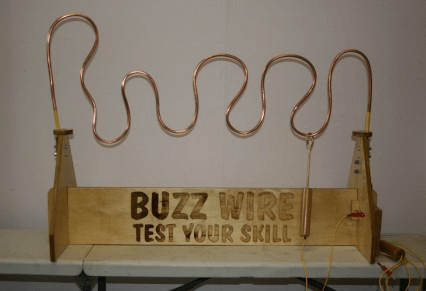
When I sit with clients, I’m often reminded of that game where you guide a metal loop along a wire.
The aim is simple: don’t let it touch the sides.

But the moment it does, you can hear a loud beeping noise. Argh. Back to the beginning.

It’s tense, asks for constant precision, and it’s exhausting to sustain.

So it can be worth asking:

When did this need for control begin?
What was happening at the time?
What does “being in control” actually mean to you?

Because, what if your patterns of eating aren’t failures?

What if something in you is trying to respond: to soothe, to regulate, to manage something that feels difficult to contain? To find joy when life feels heavy? Or grounding when life feels like it’s too exhilarating?

Our relationship with food can tell us a great deal about our relationship with ourselves.

In my experience, our relationship with food is the tip of the ice berg. It’s a symptom, not the problem in and of itself. For example, if you restrict, you might be feeling lost and overwhelmed. Or if you binge, maybe you might need release and more creativity in your life. There might not be a clear answer in this moment, but it can be worth pausing to reflect on what we might be trying to experience outside of a different body type.

When things feel uncertain, or overwhelming, how do we meet ourselves in those moments?

And what might we learn if, instead of tightening control, we became a little more curious about what’s underneath?

Because it may not be about food at all. It may be about how we’re trying to find peace.