
Why trying to control your eating might be making things feel worse | A Norwich Counsellor Explains

Why trying to control your eating might be making things feel worse

If control worked, it would have worked by now.

You tell yourself today will be different. You’re going to be “good”. You’ll get your steps in, drink the water, track everything. At first, perhaps you feel steady; Contained, reassured, peaceful, maybe even hopeful.

But by mid-afternoon, something shifts. The cravings come in; persistent, hard to ignore. You have some chocolate.

And almost immediately, something else follows. A wave of guilt. Anxiety. A sense that something has gone wrong. From there, the rules lose their footing. The day takes on a different shape. By evening, you might feel full, uncomfortable, and disconnected from yourself.

And so the cycle continues.
On, off. Trying again. Starting over.

When I sit with clients, I’m often reminded of that game where you guide a metal loop along a wire.
The aim is simple: don’t let it touch the sides.

But the moment it does, you can hear a loud beeping noise. Argh. Back to the beginning.
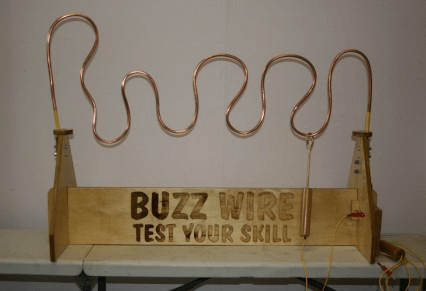
It’s tense, asks for constant precision, and it’s exhausting to sustain.

So it can be worth asking:

When did this need for control begin?
What was happening at the time?
What does “being in control” actually mean to you?

Because, what if your patterns of eating aren’t failures?

What if something in you is trying to respond: to soothe, to regulate, to manage something that feels difficult to contain? To find joy when life feels heavy? Or grounding when life feels like it’s too exhilarating?

Our relationship with food can tell us a great deal about our relationship with ourselves.

In my experience, our relationship with food is the tip of the ice berg. It’s a symptom, not the problem in and of itself. For example, if you restrict, you might be feeling lost and overwhelmed. Or if you binge, maybe you might need release and more creativity in your life. There might not be a clear answer in this moment, but it can be worth pausing to reflect on what we might be trying to experience outside of a different body type.

When things feel uncertain, or overwhelming, how do we meet ourselves in those moments?

And what might we learn if, instead of tightening control, we became a little more curious about what’s underneath?

Because it may not be about food at all. It may be about how we’re trying to find peace.

What Happens in Person-Centred Counselling? A Norwich Counsellor Explains

What Happens in Person-Centred Counselling? A Norwich Counsellor Explains

If you’re thinking about starting counselling, you might be wondering what actually happens in a session.

You might be unsure what you’re supposed to say, whether you’ll be judged, or what the counsellor will expect from you.

These are completely natural questions.

In this article, I’ll offer a short introduction to person-centred counselling, and what it can feel like to sit in the room together.


A Different Kind of Conversation

Person-centred counselling can feel quite different from what people expect.

You don’t need to prepare anything in advance. There’s no pressure to explain everything clearly, and there’s no “right” place to start. You can begin wherever you are.

Sometimes that might be something that happened this week. Other times it might be a feeling you can’t quite put into words yet. That’s okay too.


“Will You Tell Me What To Do?”

This is one of the most common questions people have.

In person-centred counselling, I won’t tell you what to do or give direct advice.

Instead, my role is to listen carefully, without judgement, and to understand your experience as fully as I can.

The idea is that, when you feel truly heard, something begins to shift. You may start to understand yourself more clearly, and from there, find your own way forward.


What Does a Session Feel Like?

Sessions are shaped around you.

I aim to offer a warm, supportive, and non-judgemental space where you can speak openly about whatever is on your mind.

There may be moments where I reflect things back to you, or offer a prompt if you feel stuck. At other times, there may simply be space to think, feel, and process.

There’s no pressure to fill every silence.


You Are the Expert in Your Own Life

At the heart of person-centred counselling is a simple belief: you are the expert in your own life.

Even if things feel confusing right now, or you’re unsure what you need, there is value in your experience and your perspective.

My role is not to lead, but to walk alongside you as you make sense of things in your own way.


Taking the First Step

Starting counselling can feel like a big step, especially if you’re not sure what to expect.

You don’t need to have everything figured out before you begin.

If you’re curious about person-centred counselling, or wondering whether it might be right for you, you’re very welcome to get in touch.

I offer counselling in Norwich and online, and I’d be happy to answer any questions you may have.